This catalog is being worked on, we are looking to have 369 devices added to this by the end of Q4 2025. To see a list of devices and manufacturers visit this link.
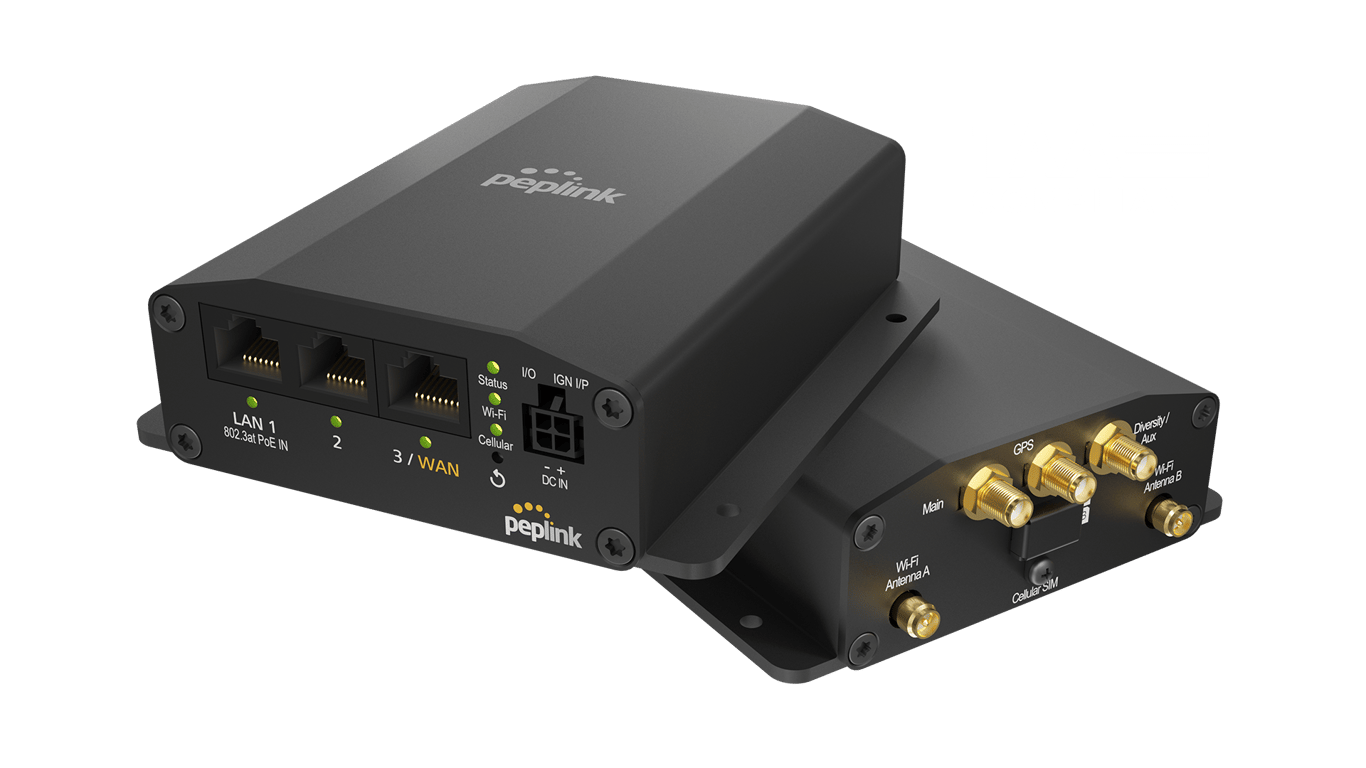
The Peplink MAX BR1 Mini is a compact LTE CAT-7 cellular router with dual Nano-SIM slots, a dedicated Gigabit WAN port, Wi-Fi 5, and SpeedFusion hot failover in a rugged metal enclosure built for extreme temperatures, DIN rail mounting, and vehicle deployments. Handles both primary cellular WAN and wired ISP failover and activates seamlessly with ISPTek’s cellular SIM card data plans.
| MPN: | MAX-BR1-MINI-LTEA-US-T-PRM |
Product Description
Check out our data plans here!
The Peplink MAX BR1 Mini is a compact single-cellular LTE CAT-7 router that delivers mobile broadband, WAN failover, and cellular primary WAN in a rugged metal enclosure designed for deployment anywhere a standard office router won’t survive. With dual redundant SIM slots, a dedicated Gigabit WAN port, Wi-Fi 5, and SpeedFusion support, the MAX BR1 Mini handles everything from backup connectivity at a fixed branch office to primary cellular WAN at a temporary site to in-vehicle connectivity for mobile operations — all managed through Peplink’s InControl2 cloud platform. For MSPs deploying at scale, ISPTek’s cellular SIM card data plans pair directly with the MAX BR1 Mini: pooled data across all deployed units, a public static IP for remote management during failover, and no activation or cancellation fees as the portfolio grows and changes.
What It Does & Key Features:
- LTE CAT-7 Modem: Supports carrier aggregation for up to 300 Mbps download / 100 Mbps upload on capable carrier networks — faster than standard CAT-4 devices and sufficient for office applications, video conferencing, cloud platforms, and light camera streaming at small-site deployments.
- Dual Redundant Nano-SIM Slots: Two physical SIM card slots provide automatic SIM-level failover — if one carrier’s network experiences a service disruption, the MAX BR1 Mini rolls to the backup SIM transparently without dropping active connections.
- Dedicated Gigabit WAN Port: The wired WAN input connects to an existing ISP modem, cable gateway, or fiber ONT — positioning the MAX BR1 Mini as a transparent WAN failover device on top of any existing network infrastructure without requiring a full gateway replacement.
- SpeedFusion WAN Bonding and Hot Failover: Peplink’s SD-WAN technology bonds the wired WAN and cellular link into a single connection that survives a WAN transition without dropping VoIP calls, active VPN sessions, or cloud application connections — seamless failover rather than the service interruption that ordinary failover produces.
- Wi-Fi 5 Dual-Band: Simultaneous 2.4 GHz and 5 GHz wireless supports local office connectivity without requiring a separate access point in smaller deployments — reducing hardware cost and rack space at branch offices, retail locations, and temporary sites.
- DIN Rail and Vehicle Mounting: Optional mounting accessories include a DIN rail kit for electrical enclosure installation and Class 1 Division 2 mounting hardware for hazardous location deployments — making the MAX BR1 Mini deployable in construction trailers, industrial enclosures, and commercial vehicle environments where standard rack-mount hardware isn’t viable.
- Wide Operating Temperature Range: -40°F to +149°F (-40°C to +65°C) operating range handles extreme cold-weather and high-heat environments without thermal management concerns — suitable for unheated equipment cabinets, vehicle installations, and outdoor enclosures in all climates.
- InControl2 Cloud Management: Centralized remote configuration, real-time monitoring, firmware updates, and network analytics via Peplink’s cloud management platform — MSPs managing dozens of deployed BR1 Mini units across client sites work from one dashboard without needing on-site access for routine management tasks.
Works Across All Major U.S. Carrier Networks:
The MAX BR1 Mini’s LTE CAT-7 modem covers the full band set used by all three major U.S. carrier networks — from low-frequency indoor-penetrating bands to mid-band high-throughput spectrum — with certifications confirmed on Verizon, AT&T, T-Mobile, FirstNet, and UScellular networks.
- Bands B13 and B12 (700 MHz): Core low-frequency LTE spectrum used by the nation’s largest carrier networks for deep building penetration — keeps the MAX BR1 Mini connected inside concrete and steel commercial structures where higher-frequency signals attenuate.
- Bands B2 (1900 MHz) and B4/B66 (AWS): High-capacity mid-band LTE spectrum providing peak throughput in metropolitan and suburban markets — the primary high-speed frequencies used by all major carrier networks for bulk data and peak performance.
- Bands B41, B42, B43, B48 (2.5 GHz / CBRS): Extended mid-band spectrum for dense urban coverage and carrier network densification — delivers higher speeds in well-covered urban environments where throughput demand is highest.
- Band B71 (600 MHz): Extended-range low-band spectrum reaching rural locations, construction sites, and geographically distributed deployments where higher-frequency bands underperform — critical for the MAX BR1 Mini’s field deployment and temporary-site use cases.
Enhanced with ISPTek’s Cellular SIM Card Data Plans:
- Public Static IP Addresses: A fixed public IP on the MAX BR1 Mini’s cellular SIM keeps the device reachable during wired ISP outages — MSPs maintain full InControl2 access, VPN connectivity, and remote diagnostic capability via cellular WAN without tracking dynamic IP changes or losing management visibility.
- Data Pooling Across Devices: All MAX BR1 Mini SIMs on an ISPTek account share one data pool — backup units at quiet sites contribute their unused allocation to active sites experiencing extended outages, eliminating per-SIM overages across the entire deployed fleet.
- Over 12 Custom Plans: From light-use backup plans for branch offices with minimal cellular activation history to higher-allocation plans for sites where the MAX BR1 Mini runs as primary cellular WAN, ISPTek’s 12+ plan tiers cover every deployment configuration.
- No Activation or Cancellation Fees: Activate a SIM when a new deployment goes live, deactivate it when the project ends or the client churns — no fees in either direction, no contract minimums, no carrier friction as the fleet scales.
- Zero Touch Advanced Security: ISPTek’s network-level protection activates automatically on the cellular SIM when it becomes the active WAN — securing the MAX BR1 Mini’s LTE interface without per-deployment firewall configuration or ongoing security maintenance.
Who Benefits?
- Managed Service Providers: The MAX BR1 Mini is a standard MSP deployment tool — compact enough for any installation, capable enough for enterprise-grade failover, InControl2 managed for consistent remote operations. ISPTek’s pooled SIM plans handle all client cellular billing on one account as the portfolio grows. For 5G-required sites, see the MAX BR1 Mini 5G.
- Construction Sites and Temporary Offices: Site trailers without wired ISP infrastructure use the MAX BR1 Mini as primary cellular WAN — DIN rail mounting fits standard electrical enclosures, the wide temperature range handles unheated trailer environments, and ISPTek SIMs activate immediately without ISP provisioning delays.
- Vehicle and Mobile Deployments: Field service vehicles, mobile command units, and inspection fleets use the MAX BR1 Mini for in-vehicle LTE connectivity — keeping crews connected to dispatch platforms, work order systems, and cloud tools while in the field.
- Retail Locations and Point-of-Sale Environments: Installed as a WAN failover device on top of an existing retail network, the MAX BR1 Mini activates cellular backup automatically when the primary ISP fails — keeping card readers, POS systems, and inventory platforms online without staff intervention.
- IoT and Remote Monitoring Deployments: Remote equipment monitoring stations, utility infrastructure, and sensor networks that need reliable cellular WAN at low per-site hardware cost — the MAX BR1 Mini’s compact form factor and wide temperature range make it deployable in conditions where standard office hardware fails.
- AV Integrators and Systems Installers: Installation teams deploying audio-visual systems, digital signage, and smart building technology at client sites use the MAX BR1 Mini to ensure the site has LTE connectivity during installation before the ISP is provisioned — and as permanent failover WAN afterward.
- Multi-Location Franchise and Retail Brands: Corporate IT teams standardizing the branch network stack across franchise locations deploy the MAX BR1 Mini as the consistent LTE backup layer at every site — same hardware, same InControl2 management, same ISPTek SIM account across the entire brand footprint.
The Peplink MAX BR1 Mini packs LTE CAT-7 cellular WAN, dual SIM redundancy, SpeedFusion SD-WAN, and Wi-Fi 5 into a metal chassis built for environments where reliable connectivity matters most and standard hardware often falls short. It handles failover, primary cellular WAN, vehicle connectivity, and industrial deployments — and with ISPTek’s cellular SIM card data plans providing a static IP, pooled data, and zero-fee SIM management, it’s ready to activate on day one with no carrier friction. Whether you’re deploying one unit or one hundred, ISPTek keeps the SIM layer simple so the network can do its job.
View available data plans and activate your MAX BR1 Mini today!
Product Specs
| Manufacturer | Peplink |
| Model | MAX BR1 Mini |
| Device type | Router |
| Network technology | LTE |
| LTE category support | CAT 7 |
Bands
| LTE Band Capable | B2, B4, B12, B13, B41, B42, B43, B48, B66, B71 |
| Cellular MIMO | 2x2 |
Hardware
| Ethernet Ports | 3 |