
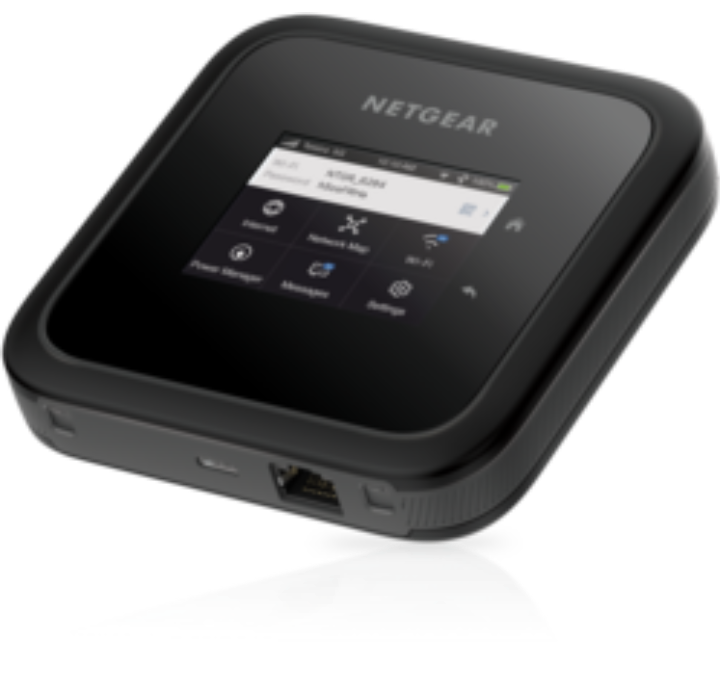
Check out our data plans here!
If you’re managing cellular connectivity across more than one business location, you’ve probably run into the same problem: each site has its own SIM, its own carrier plan, its own renewal date, and its own data allotment — and most of those allotments go mostly unused every month while you still pay for all of them. Pooled cellular data plans solve this directly. Instead of paying for the same capacity at every site whether it gets used or not, you pay for a shared bucket that all your SIMs draw from together. It’s a simpler, more efficient model — and for retail chains, restaurant groups, and any multi-location business running cellular backup or primary connectivity, it typically cuts per-location data costs significantly while actually increasing the total capacity available when any single site needs it most.
How Pooled Data Works
With a traditional per-device cellular plan, each SIM gets a fixed data allotment — say, 10GB per month. If a location only uses 2GB, those 8GB don’t roll over and don’t benefit anyone else. You’ve paid for 10GB and used 2GB. Multiply that across 20 locations and you’re paying for 200GB per month while actually consuming maybe 60GB.
Pooled data changes the math. Instead of 20 individual 10GB plans, you might run a single 100GB pool shared across all 20 SIMs. Each site draws from that shared reserve as needed. A location that has a long outage one month might use 20GB. Another that had zero downtime uses 0GB. The pool accommodates both without either site running out or wasting allocation. Your total data cost drops and your actual coverage improves simultaneously.
This is especially effective for cellular backup use cases, where most SIMs are dormant most of the time. Backup connectivity by nature is unpredictable — you don’t know which site will have an outage or how long it will last. A pool lets that unpredictability work in your favor rather than against you.
Why It’s Particularly Powerful for Multi-Location Retail
Multi-location retail operations have a specific set of requirements that make pooled data a strong fit:
- Uneven outage distribution: Not every location loses ISP connectivity at the same time. In a typical month, only a small percentage of locations will experience meaningful downtime. A pool means those locations can draw heavily while the rest of the fleet contributes unused capacity back to the reserve.
- POS and payment terminal protection: The highest-priority use of cellular backup at a retail location is keeping payment processing running. The data demand for card transactions and POS sync is relatively low — a shared pool easily handles it across dozens of locations without any single site getting starved.
- Guest WiFi and inventory platforms: Higher-bandwidth applications like guest WiFi or inventory sync need more data when the backup kicks in, but again — those spikes are temporary and distributed across locations, making the pool model efficient.
- Single billing and management: Instead of reconciling dozens of individual carrier invoices, pooled plans consolidate everything under one account. One renewal date, one invoice, one portal to manage SIM activation and data monitoring across the entire fleet.
What Happens When One Location Has a Long Outage
The concern with pooled data is always: what if one site consumes the entire pool? It’s a fair question, and the answer depends on how the pool is sized and what plan tier you choose.
ISPTek’s pooled plans are available at multiple data tiers, so you size the pool based on your realistic worst-case consumption — not per site, but across the fleet. For a 20-location retail operation where outages typically last a few hours and involve light POS and back-office traffic, a moderate pool easily handles the math. For locations with less reliable primary ISP service or higher data demands during outages, ISPTek also offers unlimited plans that can run alongside pooled SIMs on the same account — so you can put a pooled SIM at stable locations and an unlimited plan at the sites that need the extra headroom.
The flexibility to mix plan types under one account is one of the more practical advantages of ISPTek’s plan structure for multi-location operators.
Pooled Data for Cellular Backup vs. Primary Connectivity
Pooled plans work for both backup and primary cellular connectivity, though the sizing math is different:
For cellular backup: Most SIMs will use close to zero data in months with no outages. Size the pool to handle 2–3 simultaneous extended outages at your highest-traffic locations and you’ll have more than enough coverage for typical failure scenarios.
For primary cellular connectivity: If some or all locations rely on cellular as their primary ISP — common in areas without reliable wired broadband, or in temporary or kiosk locations — the data math shifts significantly. Each active site draws from the pool daily. In this case, ISPTek’s unlimited plans or larger pooled tiers are usually the better fit, with pooling still simplifying the billing side even if per-site consumption is high.
How ISPTek’s Pooled Plans Work in Practice
ISPTek manages pooled data accounts across Verizon, AT&T, and T-Mobile networks. Here’s how a typical multi-location retail setup works:
- One account, all SIMs: Every location’s SIM lives under a single ISPTek account. Add a new location, add a SIM — no new carrier contract, no separate billing relationship.
- Shared data pool: All SIMs draw from the same monthly data reserve. ISPTek’s portal shows per-SIM and total pool usage so you always know where consumption is coming from.
- Static IP available: Add a public static IP to any SIM in the pool for locations that need VPN access, remote management, or hosted services — even on backup cellular.
- No activation or cancellation fees: Add or remove SIMs from the pool without penalty. Scale up for new locations and scale back for closures without contract exposure.
- Carrier choice: Choose Verizon, AT&T, or T-Mobile based on which network has the strongest coverage at your locations. ISPTek works with all three.
Getting Started with a Pooled Plan
The right pool size depends on how many locations you’re covering, what devices are deployed, and how you’re using cellular — backup, primary, or mixed. ISPTek’s team can help you model the right pool tier based on your actual deployment, so you’re not guessing at a number and hoping it holds.
Start by taking stock of how many locations you’re running cellular at, what devices are deployed or planned, and what your typical outage frequency and duration looks like at the sites you manage. From there, choosing a pool size is straightforward — and ISPTek’s no-cancellation-fee policy means you can adjust as you learn more about actual consumption patterns after go-live.
For multi-location retail businesses and MSPs managing retail clients, pooled data is almost always the right starting point. It’s simpler to manage, more efficient per gigabyte, and flexible enough to accommodate the unpredictable nature of backup connectivity without overpaying for capacity that sits idle at stable locations every month.
