
Check out our data plans here!
If you manage cellular connectivity for multiple clients or multiple devices — across branch offices, fleet vehicles, retail locations, or any multi-site deployment — the way you structure data plans has a direct impact on your costs, your billing complexity, and your ability to scale without administrative overhead. Cellular data pooling is the single most impactful billing structure for MSPs managing cellular at scale, and it’s one of the main reasons ISPTek’s plan structure was built the way it was. This guide explains exactly what data pooling is, how it works in practice, and why MSPs who understand it have a real cost and efficiency advantage over those who don’t.
What Is Cellular Data Pooling?
Cellular data pooling means that multiple SIM cards share a single data allowance from a central pool, rather than each SIM having its own individual data limit. Instead of buying 10 separate plans at 10 GB each and getting 100 GB spread across 10 independent plans, you buy one 100 GB pool that all 10 SIMs draw from simultaneously.
The difference sounds simple. The operational implications are significant.
The Problem with Per-Device Data Plans
Individual per-device plans seem straightforward — each site or device gets its own allocation. But in practice, per-device plans create two structural problems that compound as deployments grow:
Problem 1: Data waste from uneven consumption. In any real deployment, devices don’t consume data evenly. A retail POS router might use 3 GB in a month. A branch office router might use 18 GB. A site that had an ISP outage might have used 40 GB of cellular backup. If each device is on a 10 GB individual plan, the retail site wasted 7 GB, the branch office overage-charged at punishing rates, and the outage site caused a billing emergency.
Problem 2: Management overhead multiplies with scale. Managing 50 individual SIM plans means 50 separate usage trackers, 50 renewal dates, 50 potential overage events, and 50 lines of billing to reconcile. For an MSP billing cellular connectivity as part of a managed services package, this overhead is invisible cost that doesn’t scale.
How Data Pooling Solves Both Problems
A pooled plan eliminates both problems by treating the entire fleet as a single consumption unit.
In a 200 GB pooled deployment across 10 devices, the retail site that uses 3 GB doesn’t waste 7 GB — that capacity stays in the pool for any device that needs it. The branch office that had a spike to 35 GB draws from the shared pool without incurring overage charges, as long as the total pool hasn’t been exceeded. The site that burned 40 GB during an ISP outage consumed exactly what it needed, from shared capacity that other devices weren’t using that month.
From a management perspective, you’re watching one pool balance instead of 50 individual balances. One threshold alert instead of 50. One renewal instead of 50.
Real-World Savings Example
Consider an MSP managing cellular backup connectivity for 20 small retail clients. Each site uses cellular only as ISP failover — meaning data consumption varies dramatically based on how often the wired ISP actually goes down at each location.
In a typical month, 15 of the 20 sites experience no ISP outage and use between 0.5 and 3 GB of cellular data. Three sites have brief outages and use 8–12 GB each. Two sites have extended outages and use 25–30 GB each.
On per-device 5 GB plans: the 15 light-usage sites have wasted capacity, the three mid-outage sites are near or at their limit, and the two heavy-outage sites generate overage charges. Total cost: 20 plans plus 2–4 overage bills.
On a single 200 GB pooled plan: total consumption might be 110 GB — the 15 light sites (≈40 GB total), the three mid-outage sites (≈30 GB), and the two heavy sites (≈60 GB). 90 GB of the pool is unused but available as buffer. Zero overage charges. One line item on the billing reconciliation.
Why MSPs Are the Biggest Winners from Data Pooling
End users benefit from pooling when they have multiple devices. But MSPs benefit at a multiplied scale because they’re managing multiple clients, each of whom has multiple devices, across diverse usage patterns that are impossible to predict device by device.
Pooling lets MSPs:
- Buy bandwidth in bulk at lower per-GB effective rates rather than paying consumer-tier per-device plan pricing across every managed device
- Absorb unexpected spikes without billing surprises — an extended outage at one client site doesn’t generate an overage bill, it draws from shared pool capacity that other sites aren’t using
- Simplify billing reconciliation — one pool, one account, one monthly data report to review instead of per-device tracking across every managed client
- Scale cleanly — adding a new device to the pool doesn’t require creating a new plan, setting a new limit, or monitoring a new individual allocation. It becomes another draw from the shared pool
- Bundle connectivity cleanly into managed service pricing — a flat monthly connectivity fee per site becomes easier to justify and easier to bill when you’re not absorbing per-device plan cost variance month to month
ISPTek’s Pooled Data Plans: How It Works
ISPTek’s cellular SIM card data plans are built specifically for multi-device deployments with pooling at the core. Here’s how the structure works in practice:
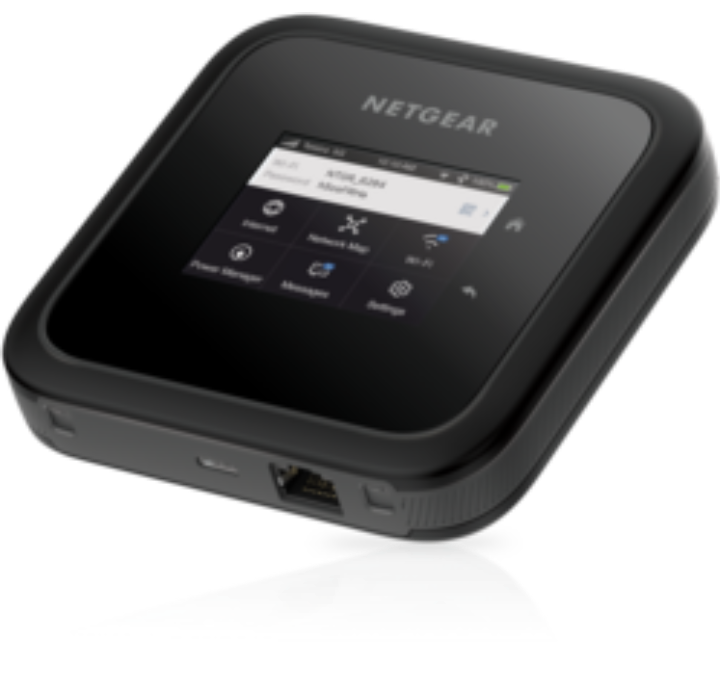
- Single account: All SIM cards managed under one ISPTek account — Peplink routers, Cradlepoint routers, NETGEAR hotspots, Teltonika industrial routers — regardless of device type or form factor
- Pooled data across all devices: Data consumption across all active SIMs draws from a shared pool, not individual per-device allocations
- Over 12 plan options: Pool sizes scale from small backup deployments to large multi-site enterprise pools — choose the pool size that fits your portfolio’s actual monthly consumption
- Public static IPs available: Assign fixed IPs to devices that need remote access — VPN endpoint routers, managed switches, SCADA systems — without static IP add-ons creating billing complexity
- No activation or cancellation fees: Add devices to the pool as client sites come online, retire them when clients churn — no per-SIM activation costs, no cancellation penalties
Pairing Pooled Plans with the Right Devices
Data pooling is most effective when the devices themselves support reliable, always-on connectivity. ISPTek’s plans work with the full range of cellular routers in the catalog — from the compact GL.iNet Spitz AX GL-X3000 for budget-conscious SMB deployments, to the Peplink MAX BR1 Pro 5G for enterprise sites, to the Cradlepoint R1900 for demanding enterprise and public safety deployments.
For MSPs looking to standardize, the practical recommendation is: pick the router platform that fits your client tier, add ISPTek SIM cards from the pooled plan, and manage both through their respective management interfaces (InControl2 or NetCloud for the routers; ISPTek’s account portal for data consumption and billing). Each tool does its job. Together, they give you a complete managed connectivity stack.
Getting Started with ISPTek Data Pooling
The fastest way to understand ISPTek’s pooling structure for your specific deployment is to look at your current per-device data consumption and model it against a pooled plan. In most cases where more than 5 devices are involved, the pooled plan delivers lower effective cost per GB and meaningfully lower billing management overhead.
ISPTek offers over 12 plan options, no activation fees, and no contracts that lock you in before you’ve had a chance to evaluate consumption patterns. For MSPs that bill cellular as part of a managed service package, that flexibility is the foundation of a connectivity offering you can scale without accumulating billing complexity. View ISPTek’s cellular SIM card data plans and start pooling today.
