
Check out our data plans here!
Managing cellular data across multiple locations exposes a fundamental flaw in standard per-SIM billing: data is locked in fixed buckets at each site, and those buckets don’t talk to each other. The site with a four-day fiber cut burns through its allocation and gets throttled. The nineteen other sites with healthy ISPs never touch their data. The total gigabytes were there — they just couldn’t move where they were needed. Pooled cellular data plans solve this by replacing individual SIM buckets with a shared reservoir every device on the account draws from. This guide covers how data pooling works, what it costs compared to per-SIM billing at scale, and who should be running pooled plans across their multi-site deployments.
Contents
- What Are Pooled Cellular Data Plans?
- Why Per-SIM Billing Breaks Down Across Multiple Locations
- How Pooled Cellular Data Plans Work in Practice
- Pooled vs. Per-SIM: A Real-World Cost Comparison
- Who Benefits Most from Pooled Cellular Data Plans
- How ISPTek Implements Data Pooling
- Frequently Asked Questions
What Are Pooled Cellular Data Plans?
A pooled cellular data plan consolidates the data allocations of multiple SIM cards into one shared account-level pool. Instead of each SIM having its own fixed monthly gigabyte bucket, every SIM on the account draws from the same total allocation. A site that consumes 15GB in a heavy month pulls from the pool. A site that consumes 200MB in a quiet month contributes its unused allocation back to the same pool. The total data cost stays the same — but where it gets used adjusts automatically based on actual site activity, not fixed-per-location assumptions.
Why Per-SIM Billing Breaks Down Across Multiple Locations
Per-SIM billing works reasonably well for a single location with predictable usage. At two or three sites it starts showing friction. At ten or more it creates recurring operational problems that compound as the portfolio grows.
The stranded data problem
Every site has a different profile. A retail location in a strip mall might have rock-solid ISP service for eleven months and then experience a week-long outage when a contractor cuts a buried fiber run. A remote monitoring station might hit its cellular allocation in the first week after a firmware update triggers unexpected data usage. A corporate branch office might use its cellular SIM exactly once in six months — for two hours during a scheduled maintenance window.
Under per-SIM billing, the data from the eleven quiet months at the retail location doesn’t carry forward. The monitoring station pays overage. The branch office’s unused allocation expires each month. None of that stranded data can help the locations that need it.
The extended outage scenario
The per-SIM billing problem becomes most acute during extended ISP outages — exactly when cellular performance matters most. A small business location running on cellular backup during a four-day fiber repair can easily consume 10–20GB depending on staff count and application usage. A 5GB per-SIM plan gets throttled after day one. A 10GB plan might last two days. The site spends the rest of the outage on degraded cellular speeds — or the account administrator scrambles to add data mid-incident.
Under a pooled plan, the same 20-site account has a collective allocation that dwarfs what any single site could consume in a normal month. The extended outage draws from that pool without triggering overage charges or mid-incident plan changes.
The management overhead
Per-SIM billing also creates administrative load that compounds with scale. Monitoring twenty individual SIM allocations — watching for sites approaching their limits, adjusting plans seasonally, handling overage charges — is ongoing work that doesn’t exist under a pooled model. One pool, one usage number, one threshold to watch.
How Pooled Cellular Data Plans Work in Practice
The mechanics of data pooling are straightforward: all SIM cards on a pooled account are assigned to the same data pool and share a single total allocation. Usage at any site reduces the pool total. Unused data at any site benefits every other site automatically — no manual transfers, no plan changes, no support tickets required.
Pool IDs and usage tracking
Pooled accounts typically operate through a pool identifier — a unique ID that ties multiple SIM cards to the same shared allocation. Individual SIM usage can be tracked by ICCID (the SIM card’s serial number), and the pool’s total usage is visible at the account level. ISPTek’s data usage tracker updates hourly, giving account holders a real-time view of combined consumption across all pooled SIMs.
Plan tier requirements
Not all plans pool together. ISPTek’s pooling structure requires SIMs to be on the same plan category — base-tier plans pool with other base-tier plans, and higher-tier plans pool within their own category. This is worth knowing when designing a mixed-use deployment: a handful of high-usage primary WAN SIMs and a large number of low-usage backup SIMs may be more efficiently managed as separate pools rather than combined.
SD-WAN health check data usage
One operational detail worth knowing: SD-WAN platforms like Peplink and FortiGate run continuous health check pings over all WAN connections, including cellular. This generates a small but consistent amount of background data usage — typically a few hundred MB per month per SIM — even when the cellular connection is in standby failover mode and not actively passing user traffic. Under a pooled account, this background usage is distributed across the pool and rarely significant. Under a small per-SIM plan, it can eat into the allocation unexpectedly.
Pooled vs. Per-SIM: A Real-World Cost Comparison
The economics of pooling become clearer with a concrete example. Consider 20 client sites, each with a cellular backup SIM assigned to a 5GB individual plan at $45/month per SIM.
| Scenario | Per-SIM Model (20 × 5GB) | Pooled Model (100GB shared) |
|---|---|---|
| Normal month — no outages | $900/mo, ~95GB unused across account | $900/mo, same |
| One site has 4-day ISP outage (uses 18GB) | Overage charges on that SIM; other 19 SIMs unused | Draws from pool — no overage, no action needed |
| Three sites have outages same month (8GB each) | Overages on all three; possible throttling | 24GB consumed from pool — still well within 100GB |
| Admin overhead | Monitor 20 individual SIM dashboards | Monitor one pool total |
| End-of-month unused data | Expires in each individual bucket | Stays available in the pool through the billing cycle |
The pooled model doesn’t reduce the monthly cost — total data purchased stays the same. What it eliminates is the overage cost, the administrative overhead, and the performance degradation during extended outages. For an MSP managing client SLAs, those savings are real and recurring.
Who Benefits Most from Pooled Cellular Data Plans
Pooled plans deliver the most value in deployments where cellular usage is uneven across locations — which describes nearly every multi-site network.
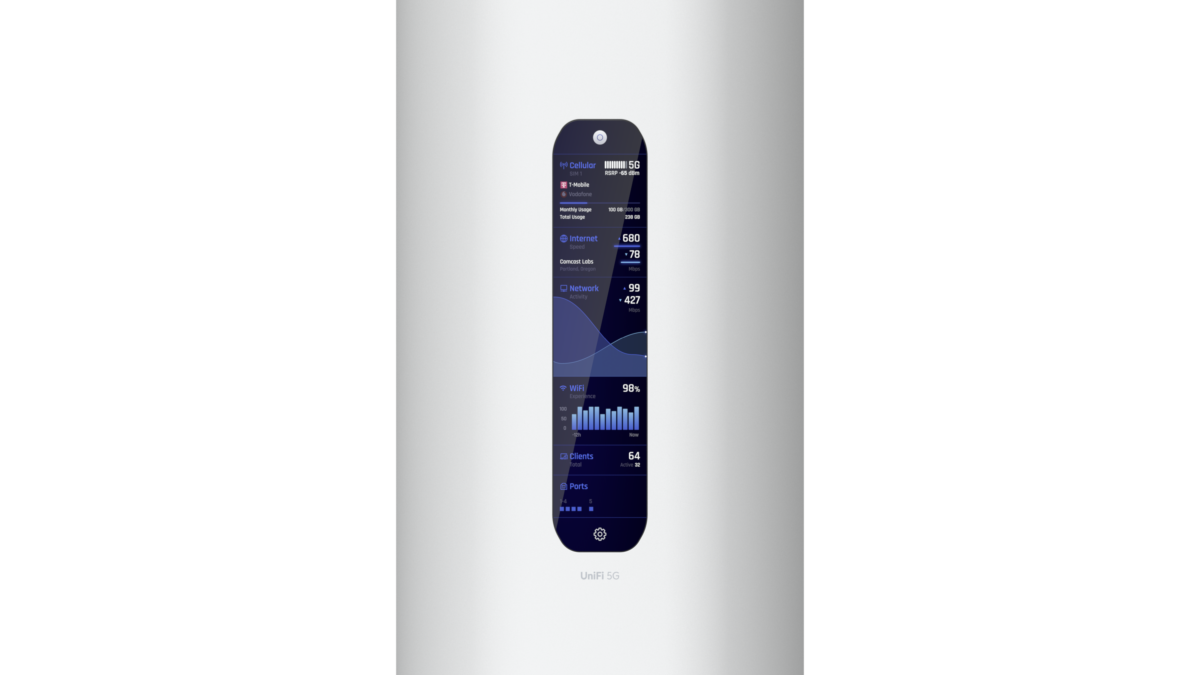
- Managed Service Providers: MSPs managing 10, 20, or 50 client sites face the per-SIM billing problem at maximum scale. Every client location has different ISP reliability, different outage frequency, and different failover duration. A pooled account with all client SIMs on a shared allocation is operationally simpler and economically more efficient than managing individual SIM plans per client. ISPTek’s pooled model is specifically designed for this use case — one account, one invoice, one pool for the entire client portfolio. For MSPs deploying UniFi 5G Max or Dream Router 5G Max devices at client sites, pooled plans are the standard approach.
- Multi-location retail chains: A regional retailer with 15 locations doesn’t need every store drawing on a separate 5GB plan. Most months, most stores won’t trigger failover at all. Pooled data means the few stores that do have an ISP issue during a high-traffic weekend get full coverage without any manual intervention.
- Franchise systems: Corporate-owned and franchisee locations can all be on the same pooled account. Cellular backup works consistently at every location, billing is consolidated, and the franchisor maintains visibility across the entire portfolio from one dashboard. A franchisor that standardizes on one branch router, such as the Peplink Balance 310 5G with its built-in 5G modem and 10G wired WAN port, can put every location’s SIM in the same pool.
- Healthcare groups and medical offices: Multi-site healthcare operators — regional clinic groups, dental chains, physical therapy networks — have consistent connectivity requirements at every location. Pooled cellular backup ensures any location experiencing an ISP outage stays connected without clinic staff needing to contact IT or manage data limits.
- Industrial and IoT deployments: Remote monitoring stations, utility infrastructure, and construction site networks often have highly variable data usage depending on reporting intervals, firmware update schedules, and active monitoring events. Pooled plans absorb these variations across a device fleet without individual plan management. A telemetry router such as the Peplink MAX BR1 Mini Core, which Peplink builds without Wi-Fi or GPS for networks that need a highly secure connection, can run on the same pooled plan as the rest of the fleet.
How ISPTek Implements Data Pooling
ISPTek’s cellular SIM card data plans support data pooling across all SIMs on an account. Here’s how it works in practice:
- Pool IDs: Each pool is assigned a unique identifier. Multiple SIM cards are linked to the same pool ID, and their combined usage is tracked against the shared allocation. Account holders can monitor pool usage by pool ID or check individual SIM usage by ICCID at any time.
- Live usage tracker: ISPTek’s usage tracker updates at least hourly and shows current consumption for any SIM or pool. During an active outage, account administrators can see exactly how much data the affected site has consumed and how much remains in the pool.
- Multi-carrier, single pool: ISPTek’s plans run across Verizon, AT&T, T-Mobile, and UScellular networks. SIMs on different underlying carrier networks can be on the same account, managed through the same portal, with unified billing — even if individual SIMs are on different carrier networks based on coverage at each site.
- No activation or cancellation fees: Adding a SIM to the pool when a new site comes online, and removing one when a site goes offline, carries no activation or termination fees. The pool scales with the deployment without billing friction.
- Static IP available: Any SIM in the pool can be assigned a public static IP address for out-of-band management access during failover events — critical for MSPs who need to reach client devices when the primary ISP is down.
For MSPs looking to understand how pooled plans fit into a full UniFi deployment, see our guides on selecting the right UniFi cellular data plan and deploying Ubiquiti UniFi cellular backup at scale.
Frequently Asked Questions
How many SIM cards can be in one pool?
There is no published maximum — pools scale to fit the deployment. ISPTek requires a minimum of two SIM cards to create a pool. For MSPs managing large client portfolios, pools with dozens of SIMs are standard practice.
Can I pool SIMs on different carrier networks?
Yes. ISPTek manages data pooling at the account level across carrier networks. A Verizon-based SIM at one site and an AT&T-based SIM at another site can both draw from the same pool on the same ISPTek account. The underlying carrier network is independent of the pooling structure.
What happens when a pooled account reaches its data limit?
This depends on the plan tier. Some ISPTek plans support data overage at a per-GB rate once the pool is exhausted; others throttle speeds. The pooled structure means the threshold is significantly higher than any individual SIM’s allocation — most multi-site accounts don’t reach the pool limit in normal operation. Accounts with predictable high usage can size the pool appropriately during initial setup.
Do all ISPTek plans support pooling?
Data pooling is available across ISPTek’s plan tiers, but pooling requires SIMs to be on the same plan category. Base-tier plans pool together; higher-tier plans pool within their own category. ISPTek’s team can help determine the right pool structure for a mixed-use deployment with both backup and primary WAN SIMs.
Does pooling require any special hardware or configuration?
No. Pooling is managed at the account and SIM level — it doesn’t require any specific device model, firmware version, or router configuration. Any device compatible with ISPTek SIM cards can participate in a pooled plan. View ISPTek’s data plans and start building your pooled deployment today.
