
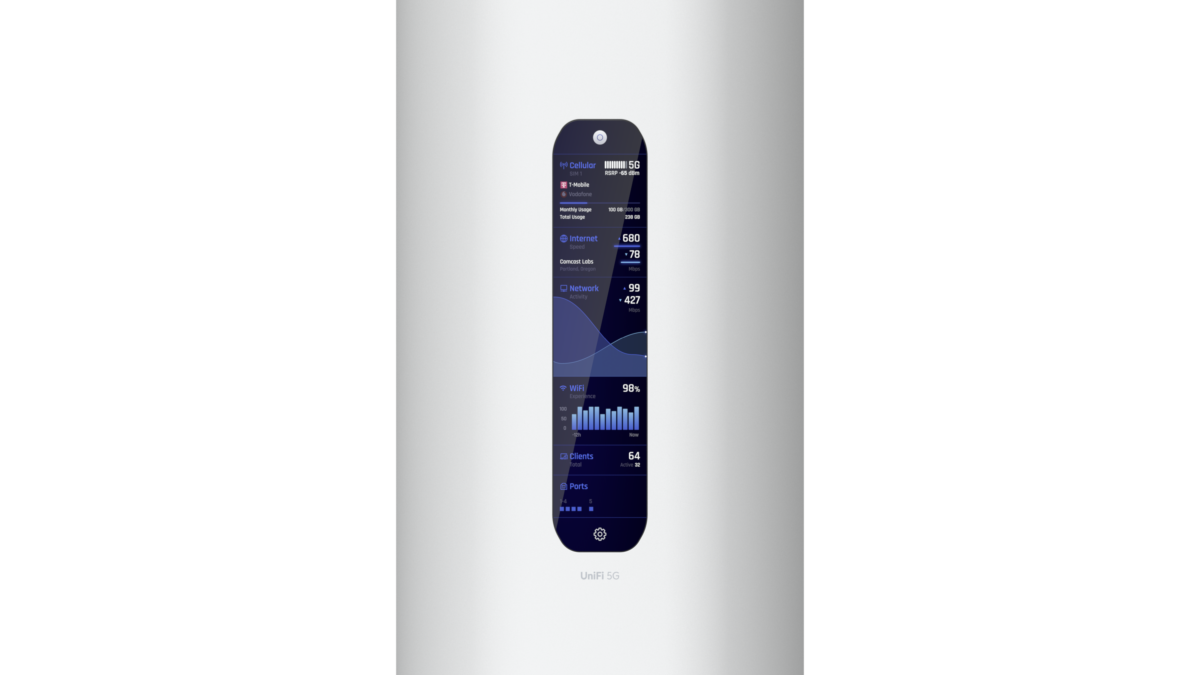
For MSPs managing Ubiquiti UniFi networks, cellular backup has shifted from a nice-to-have to a standard line item on every new deployment proposal. When the primary ISP fails, the gateway goes offline — and with it, the UniFi Site Manager tunnel the MSP uses for remote management. Without cellular backup, the team is flying blind, the client is down, and someone has to drive there. With it, the gateway stays online, the MSP keeps full visibility, and the client’s operations continue uninterrupted. Ubiquiti has built the most seamlessly integrated cellular lineup in the SMB and prosumer networking space. This guide covers the full hardware lineup, how MSPs are matching each device to the right deployment scenario, and why pooled SIM card data plans from ISPTek are how MSPs make it work at scale across their entire client portfolio.
Contents
- The UniFi Cellular Lineup: Every Device MSPs Should Know
- The Deployments MSPs Run Most
- Why Carrier-Direct SIM Plans Don’t Scale for MSPs
- How ISPTek Solves the SIM Layer for Ubiquiti MSPs
- Zero-Touch Deployment: Online Before the ISP Shows Up
- Which Client Verticals Close Fastest on Cellular Backup
- Building Recurring Revenue with ISPTek and Ubiquiti
- Frequently Asked Questions
The UniFi Cellular Lineup: Every Device MSPs Should Know
Ubiquiti now has a full cellular product stack covering everything from a $129 IoT router to a $579 all-in-one 5G gateway. Here’s the current lineup and where each product fits in an MSP portfolio.
| Device | Price | Technology | SIM Slots | Carriers (US) | Primary WAN? |
|---|---|---|---|---|---|
| Dream Router 5G Max | $579 | 5G NR + LTE | 2x Nano | Verizon, AT&T, T-Mobile | Yes |
| UniFi 5G Max | $399 | 5G NR + LTE | 2x Nano | Verizon, AT&T, T-Mobile | Yes |
| UniFi 5G Max Outdoor | $459 | 5G NR + LTE | 2x Nano | Verizon, AT&T, T-Mobile | Yes |
| LTE Backup Pro | $279 | LTE Cat 4 | 1x Nano (BYOD) | AT&T only | Failover only |
| Mobile Router Ultra | $129 | LTE Cat 4 | 1x Nano | Carrier-unlocked | Yes |
| Mobile Router Industrial | $199 | LTE Cat 4 | 1x Nano | Carrier-unlocked | Yes |
The three 5G Max products — the Dream Router 5G Max, UniFi 5G Max, and UniFi 5G Max Outdoor — share the same modem chipset: up to 3.4 Gbps 5G download, certified on Verizon, AT&T, and T-Mobile, with dual Nano SIM slots and automatic failover between carriers at the modem level before the gateway even registers a WAN drop. These are the devices MSPs are standardizing on. The Mobile Router Ultra and Mobile Router Industrial round out the portfolio for IoT and remote monitoring deployments where cost-per-site has to stay lean.
One note on the original LTE Backup (U-LTE): it ships with Ubiquiti’s own bundled AT&T SIM and plan, and third-party SIMs aren’t compatible with that unit. The LTE Backup Pro, the 5G Max family, and both Mobile Routers all accept bring-your-own SIMs — which is where ISPTek comes in.
The Deployments MSPs Run Most
Ubiquiti’s cellular lineup isn’t a one-size-fits-all proposition. MSPs are matching specific hardware to specific deployment scenarios — and the combinations matter for both performance and cost.
The Standard Client Site: Dream Router 5G Max
For a new client location — a medical clinic, a professional services office, a regional branch — the Dream Router 5G Max is the MSP’s flagship deployment device. One box handles everything: tri-band WiFi 7 covering up to 300+ simultaneous users, a 5G cellular modem, a managed UniFi gateway, and a full UniFi OS host running Network, Protect, Access, and Talk. The 10G SFP+ uplink connects to the client’s existing fiber or cable modem. If that connection goes down, the ISPTek SIM takes over automatically. The MSP manages the entire site — network, cameras, access control — from UniFi Site Manager without touching a second platform.
Upgrading Existing Sites: UniFi 5G Max
The MSP’s best clients are already on UniFi. Adding the UniFi 5G Max to any site with a PoE-capable switch adds full 5G failover coverage without replacing the existing gateway. The device plugs into any PoE port, adopts automatically to Site Manager, and appears as a standard WAN interface. Drop in an ISPTek SIM, configure it as WAN2, and that site now has cellular backup. This is the MSP’s easiest upsell — minimal labor, existing hardware stack, and a new monthly recurring revenue line on the client’s invoice.
Poor Signal Locations: UniFi 5G Max Outdoor
Some client sites sit in concrete-and-steel buildings, strip malls with metal roofs, or fringe coverage areas where an indoor cellular unit struggles against building attenuation. The UniFi 5G Max Outdoor goes on the rooftop or exterior wall, where its embedded antennas work with the RF environment instead of fighting it. The IP67 rating handles rain, snow, and humidity, and the -40°C to 65°C operating range means there are no cold-weather concerns for rooftop installs. The MSP charges a premium for the exterior installation and passes on a higher-tier ISPTek plan for the performance the location demands.
IoT and Monitoring Deployments: Mobile Router Ultra and Industrial
For retail kiosks, remote equipment monitoring stations, construction site offices, and outdoor utility infrastructure, the Mobile Router Ultra ($129) and Mobile Router Industrial ($199) bring cellular connectivity to locations where the per-site hardware budget is tight. Both accept ISPTek SIMs, both support cellular as primary WAN, and both integrate into the same UniFi ecosystem the MSP already manages. The Industrial variant adds IP66 weatherproofing, DIN rail mounting for electrical cabinet installs, and multiple power input options for field deployments. At these price points, the MSP can justify deploying cellular at every client location regardless of scale — and ISPTek’s light-use pooled plans keep the monthly data cost in line with the use case.
Why Carrier-Direct SIM Plans Don’t Scale for MSPs
MSPs who source cellular SIMs directly from carrier business channels consistently run into the same friction points at scale.
Fragmented billing and management. A portfolio of 30 client sites rarely has every site on one carrier — Verizon covers some locations better, AT&T covers others. The MSP ends up managing two or three separate carrier accounts, three management portals, three monthly invoices, and three support queues when anything needs changing.
Per-SIM data caps with no sharing. Every SIM has its own fixed data bucket. When a client’s ISP goes down for three days, that site’s SIM burns through its allocation and gets throttled — while a dozen other SIMs across the portfolio sit idle with unused data. The MSP either absorbs overage fees or the client gets degraded connectivity during an extended outage — the exact moment cellular performance matters most.
Static IPs aren’t standard. Out-of-band management via cellular only works if the MSP can reach the device’s WAN interface reliably — which requires a public static IP. Consumer and standard business SIM plans assign dynamic IPs that change at reconnect. Getting a static IP on a carrier plan means a special plan tier, a phone call to a business rep, and often a support representative who doesn’t know the provisioning process.
Activation and cancellation friction. Every new client site means another activation fee. Every client who churns means an early termination fee if the SIM is under contract. Standard carrier business plan terms are designed for a single-location business managing one or two SIMs — not a service provider with a dynamic, growing client portfolio.
How ISPTek Solves the SIM Layer for Ubiquiti MSPs
ISPTek’s data-only SIM card plans are built for the MSP use case. One account covers every UniFi cellular device in the portfolio, regardless of site count or which underlying carrier network each SIM uses.
Pooled Data Across the Entire Portfolio
All SIMs on an ISPTek account draw from a shared data pool. Sites that have a quiet month — ISP ran without issue, cellular barely activated — contribute their unused allocation to the sites that needed it. An extended outage at a single location doesn’t produce an overage bill; it draws from the collective pool and the account stays healthy. For an MSP managing 20 or 50 Ubiquiti sites, this is the difference between per-SIM data administration and a single aggregate view across the entire portfolio.
Public Static IPs Included
Every ISPTek SIM can be assigned a public static IP — no special plan tier, no carrier support call required. When the primary ISP at a client site goes down, the MSP reaches the Dream Router 5G Max or UniFi 5G Max via its static cellular IP from their RMM platform, pushes configuration changes, restarts services, and resolves the issue remotely. The client often doesn’t know the ISP was down. The MSP never left their desk.
No Activation or Cancellation Fees
Add a SIM when a new client signs. Cancel it when they leave. ISPTek charges no activation fees and no termination penalties regardless of how long the SIM has been active. The billing model matches how MSPs actually manage a client portfolio — fluid, not locked into carrier contract terms.
Over 12 Plan Options
A healthcare clinic using cellular as a true secondary WAN has different data requirements than a retail kiosk where cellular only activates during a 4-hour ISP outage once a quarter. ISPTek offers more than 12 plan tiers to right-size each SIM to its actual use case — all under the same account, on the same invoice, managed through the same portal.
Zero Touch Advanced Security
When cellular becomes the active WAN, that SIM’s IP is exposed to the internet. ISPTek’s Zero Touch Advanced Security applies network-level protection at the SIM layer automatically — no per-site firewall rule configuration, no carrier portal settings to manage. The MSP isn’t adding a security task to every SIM deployment; it’s handled at the network layer before traffic reaches the device.
Zero-Touch Deployment: Online Before the ISP Shows Up
The most operationally valuable thing an ISPTek SIM enables for Ubiquiti MSPs is the cellular-first deployment model. Here’s the workflow:
- MSP pre-configures a Dream Router 5G Max at their own office — VLANs, security policies, camera integrations, application settings
- An activated ISPTek SIM goes into the device before it ships
- The device ships directly to the client site — or is handed to a low-skill local contact
- The client plugs in power and the ISP drop, or just power if the ISP isn’t provisioned yet
- The device comes up on cellular, calls home to UniFi Site Manager, and adopts itself automatically
- The MSP pushes any final adjustments remotely — no one needs to be on-site
The ISP connection becomes WAN1 once it’s installed, and the ISPTek SIM stays as automatic failover WAN2. But from the moment power is applied, the site is online. For MSPs doing high-volume deployments — national retail rollouts, franchise installations, multi-location enterprise builds — eliminating the dependency on ISP provisioning from the critical path is a meaningful operational advantage. The site comes up when the hardware arrives, not when the ISP gets around to it.
Which Client Verticals Close Fastest on Cellular Backup
Every client benefits from cellular backup — but some verticals close the conversation faster than others, especially after they’ve experienced a connectivity outage without protection.
- Retail and point-of-sale: When the connection drops, the card readers stop. An MSP who pre-installed a UniFi 5G Max or Mobile Router Ultra at every location is the reason the Saturday rush ran smoothly when the ISP had a trunk failure. This vertical often becomes self-closing after one outage without protection.
- Healthcare clinics and medical offices: EMR systems, digital imaging, appointment platforms, and e-prescribing all require connectivity. A downed connection in a clinical setting creates scheduling disruption and documentation delays. Cellular backup — and the Dream Router 5G Max’s ability to keep the site running without any manual intervention — is a straightforward sell to any practice manager who’s experienced a connectivity failure during patient hours.
- Hospitality and restaurants: POS systems, kitchen display screens, guest WiFi, and PMS platforms are all connectivity-dependent. A restaurant’s Friday night service cannot pause because a fiber line was cut a mile away. Hotels need check-in and check-out running 24/7.
- Multi-location businesses: Franchise brands, regional financial services firms, and multi-site healthcare groups want standardization and consistency across every location. Every site on the same UniFi stack, every site with an ISPTek SIM, every site visible from one Site Manager dashboard and one ISPTek account. Scale is the MSP’s competitive advantage here — and ISPTek’s pooled data model was built for it.
- Financial services: Branch banks, credit unions, and insurance offices operate in a regulatory environment that increasingly requires documented business continuity plans. Cellular backup isn’t a convenience — it’s a compliance deliverable. MSPs who position it that way shorten the sales cycle significantly.
Building Recurring Revenue with ISPTek and Ubiquiti
Every ISPTek SIM plan is a recurring monthly revenue line for the MSP. The math is straightforward: an MSP with 40 client sites, each paying $30–50/month for a cellular backup SIM plan, is collecting $1,200–2,000/month in predictable recurring revenue before any other service fees. Unlike one-time hardware sales, SIM revenue compounds as the client portfolio grows — and clients on cellular backup churn less, because their network reliability is visibly better than what they’d get without it.
The pooled data model improves the economics further as the portfolio scales. The larger the pool of SIMs on the account, the more efficiently shared data is used across the portfolio — sites with light usage in a given month subsidize sites that needed heavier failover coverage. Data waste decreases and overall account efficiency improves as the portfolio grows, which means the MSP’s data cost per site trends downward even as the client count increases.
Ubiquiti has built the hardware infrastructure. ISPTek handles the SIM layer. The MSP’s job is to put the right device at the right client site, activate the right ISPTek plan, and collect the monthly recurring revenue that comes from keeping clients online. View ISPTek’s data-only SIM card plans and start activating your Ubiquiti UniFi deployments today.
Frequently Asked Questions
What SIM card do I use with Ubiquiti UniFi cellular devices?
All current UniFi cellular devices — the Dream Router 5G Max, UniFi 5G Max, UniFi 5G Max Outdoor, LTE Backup Pro, Mobile Router Ultra, and Mobile Router Industrial — accept standard nano-SIM (4FF) cards. None of these devices are carrier-locked (with the exception of the LTE Backup Pro, which is AT&T-only). Any data-only SIM from a compatible provider, including ISPTek, works across all three major US carrier networks depending on which device you’re using.
Can MSPs manage multiple UniFi SIMs from one account?
Yes. ISPTek’s platform is designed for multi-SIM MSP accounts. All SIMs on the account — regardless of which carrier network each one runs on — appear under one portal, one monthly invoice, and one shared data pool. There’s no per-site account setup. When you add a new client site, you add a SIM. When a client churns, you cancel it. No activation fees, no contract terms holding you to a SIM you no longer need.
Does ISPTek support the zero-touch deployment model with UniFi?
Yes. ISPTek SIMs can be activated before the device ships. Insert the SIM at your office, pre-configure the Dream Router 5G Max or UniFi 5G Max, and ship it to the client site. When the client applies power, the device comes up on the ISPTek SIM, connects to UniFi Site Manager, and adopts automatically. The MSP handles final configuration remotely — no technician visit required until (or unless) the wired ISP needs to be connected.
What’s the difference between the UniFi 5G Max and Dream Router 5G Max for MSP deployments?
The key difference is scope. The UniFi 5G Max is a 5G cellular gateway — it adds cellular WAN capability to an existing UniFi deployment. The Dream Router 5G Max is an all-in-one UniFi OS console that replaces the gateway entirely, adding WiFi 7, 5G cellular, and full UniFi application hosting in a single device. For new deployments at client sites without existing UniFi hardware, the Dream Router 5G Max is typically the right choice. For adding cellular backup to an existing UniFi site, the UniFi 5G Max is the more cost-efficient option.
Does ISPTek include static IPs with UniFi cellular SIM plans?
Yes. Public static IP addresses are available on ISPTek SIM plans — not as a premium add-on, but as a standard plan option. For MSPs, this is critical: when a client’s primary ISP fails and the UniFi gateway switches to cellular, the MSP needs to be able to reach that device remotely via a stable, known IP address. A static IP means out-of-band management works from the moment failover triggers, regardless of what’s happening with the primary ISP or the UniFi cloud infrastructure.
